
Invited Speakers

Distinguished experts from academia and industry who will share their insights at the ICMTI & TSCRDT 2026.

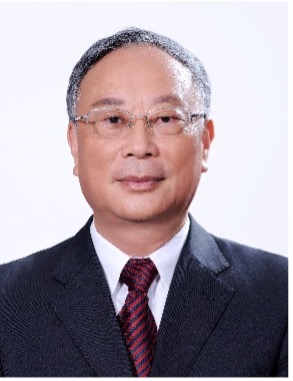
Min Xie

Chair Professor of Industrial Engineering, City University of Hong Kong, Hong Kong SAR Fellow of IEEE and IISE, Member of European Academy of Sciences and Arts

Short bio

Min Xie has been a Chair Professor of Industrial Engineering at City University of Hong Kong since 2011. He entered USTC in China in 1978, and went to Sweden in 1979 to complete his undergraduate studies at the Royal Institute of Technology. He later earned his PhD in Quality Technology from Linkoping University in 1987. He was with the National University of Singapore from 1991 until 2011. Professor Xie has conducted extensive research in reliability and safety engineering focusing on general complex systems, and completed many projects, including a large scale maritime transportation safety research project funded under Singapore-Poland collaboration scheme. Prof Xie has published over 400 journal papers and 10 books, is also a Clarivate Highly Cited Researchers 2025. He has mentored about 80 PhD students who now excel in industry and academia across continents. Prof Xie is a fellow of IEEE, elected to European Academy of Sciences and Arts and currently also chairs the Fellow Evaluation Committee of IEEE Systems Council.

Title

Safety and Reliability of Intelligent and Autonomous Systems – some challenges and research issues

Abstract

Maritime transportation systems are becoming increasingly intelligent. That brings many new challenges—particularly from a safety and reliability point of view. Beyond traditional safety engineering and system-reliability issues, we must also address maritime-specific issues such as sensor degradation in harsh sea environments, data-quality problems from intermittent communications, and the operational performance of learning algorithms under varying weather, traffic and cargo conditions. Explainability, scalability, and robust adaptation of AI models are also critical for decision making related to autonomous ships, smart ports, etc. For AI-assisted systems, socio-technical factors and human–AI interaction are also important. Regulatory further complicate system modelling, verification and certification. This talk will examine these challenges and discuss some possible solutions and directions for future research issues.

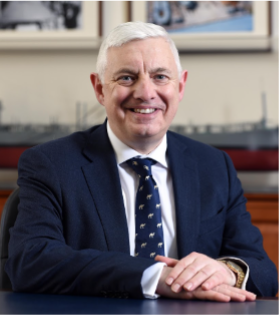
Jin Wang

Short bio

Prof. Jin Wang has been Director of Liverpool Logistics, Offshore and Marine (LOOM) Research Institute at Liverpool John Moores University (LJMU) since 2003 and was Associate Dean (Research) in the Faculty of Engineering and Technology at LJMU from 2015 to 2025. His research interests are in design and operation of large maritime engineering systems such as ships and offshore wind, oil and gas installations. He has published extensively in this area, making him among top 60 in Civil Engineering (including maritime engineering and naval architecture) in terms of publications and citations in the World Ranking of Scientists worldwide annually since 2021. He has led a number of research projects funded by sources such as UR research councils and EU. He has won several awards for his research work including the Outstanding Contribution Award 2025 from the IMarEST and the 2017 RINA - Lloyd’s Register Maritime Safety Award for Lifetime Achievement. Prof. Wang has been a sub-panel member (Engineering) in the UK’s Research Excellence Framework (REF) 2014, 2021 and 2029, for assessing the quality of research in UK higher education institutions. He was elected to the European Academy of Sciences in 2023 and the European Academy of Sciences and Arts in 2022. He was Chair of the UK-Malaysia University Consortium (UK-MUC) of 16 UK and 20 public Malaysian Universities from 2022 to 2024 and has been a co-chair since 2025.

Title

Holistic Risk-based Design and Operation of Large Maritime Engineering Systems in the Era of Decarbonisation and Digitalisation

Abstract

The maritime sector is undergoing a profound transformation driven by the twin imperatives of decarbonisation and digitalisation. Large maritime engineering systems including ships, ports, offshore infrastructures, and integrated logistics networks are becoming increasingly complex as they adopt low-carbon technologies, alternative fuels, green energy generation and data-driven operational frameworks. These developments introduce new forms of uncertainty and risk that challenge traditional engineering design and operational practices. This presentation explores how holistic risk-based design and operation can support the safe, reliable, and efficient transition of large maritime systems in this evolving landscape. The talk will present a systems-oriented perspective that integrates engineering design, operational decision-making, and lifecycle management under a unified risk framework. Particular attention will be given to emerging risks associated with decarbonisation technologies as well as the opportunities and challenges introduced by digitalisation. The presentation will demonstrate how probabilistic risk assessment and decision-making technologies can enhance resilience, safety and sustainability while supporting innovation.

Carlos Guedes Soares

Short bio

Prof. Carlos Guedes Soares is a Distinguished Professor of Instituto Superior Técnico, University of Lisbon. He is the Scientific Coordinator of the Centre for Marine Technology and Ocean Engineering (CENTEC), which is a research centre classified by the Portuguese Foundation for Science and Technology as Excellent in 2014 and 2018. He received the MSc. and Ocean Engineer degrees from the Massachusetts Institute of Technology, USA in 1976, the Ph.D. degree from the Norwegian Institute of Technology of the University of Trondheim, in 1984, and the Doctor of Science degree from the Technical University of Lisbon, Portugal, in 1991. He is Doctor Honoris causa from the Technical University of Varna (2003) and University Dunarea de Jos in Galati, (2004). He has supervised more than 55 PhD students, has co-authored more than 700 journal papers and has more than 20,000 citations in Web of Science (29,000 in SCOPUS). He is one of the 5 Founding Members of the European Safety and Reliability Association (ESRA), and has been General Secretary, Vice-Chairman and Chairman of ESRA. He has been Chairman of the International Maritime Association of the Mediterranean (IMAM) (2005-2011; 2017-2019) and of the ISSC - Ship and Offshore Structures Congress (2012-2015). He has been Chair or Co-Chair of various conferences in the series of OMAE, ESREL, IMAM, MARSTRUCT, MARTECH, ICCGS and RENEW Conferences. He has been coordinating the Symposium on Structures, Safety and Reliability of the Ocean, Offshore and Arctic Engineering (OMAE) Conference since 1989. He has been Editor and Editor-in-Chief of the Reliability Engineering and System Safety Journal (Elsevier) since 1992, is Co-Editor in Chief of the Journal for Marine Science and Application (Springer) and he belongs to the Editorial Board of more than 15 Journals. He is a Fellow of SNAME, RINA, IMarEST and ASME, "Membro Conselheiro" of Ordem dos Engenheiros, Member of ASCE, AGU, AMS and SRA and Member of the Portuguese Academy of Engineering.

Title

TBD

Abstract

TBD